
The Meaning Behind Every Balinese Ceremony
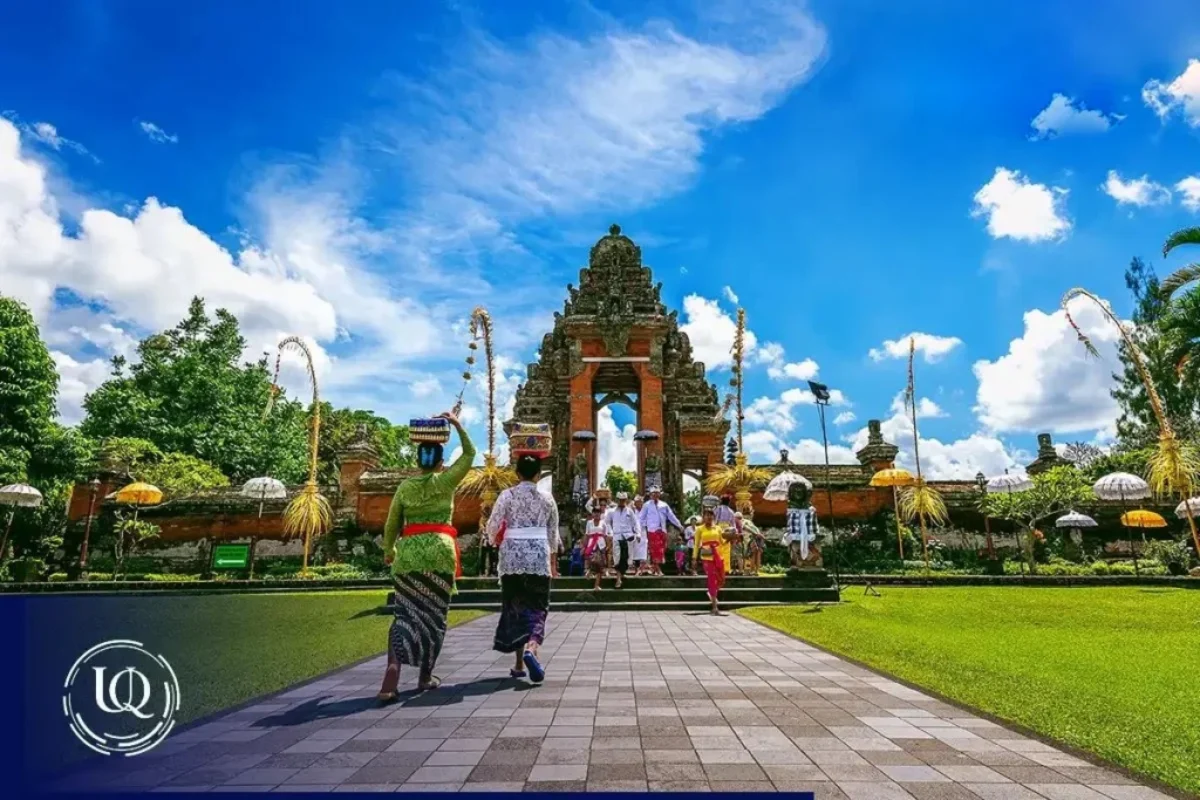
In Bali, time is measured less in weekdays and weekends than in offerings, processions, and prayers. Ritual is woven into daily life here, from the little palm-leaf trays left at doorways each morning to the island-wide day of silence that pauses everything at once. For anyone drawn to Ubud and Sayan, understanding the Balinese ceremonies unfolding around you turns a beautiful backdrop into something you can truly feel part of. Here is what the most cherished ones mean.
Melasti
A few days before the new year, the coastline fills with color. Melasti is a purification rite held three to four days before Nyepi, when whole villages walk to the sea, a river, or a lake to cleanse both themselves and the sacred effigies, known as pratima, kept in their temples. The name traces to Sanskrit words for dirt and for casting away, and the intention is exactly that: to draw negativity out of the human self, the bhuana alit, and the wider universe, the bhuana agung. Priests lead prayers to the sound of gamelan, and holy water called Tirta Amertha carries the blessing home.
Ogoh-Ogoh
On the eve of Nyepi, the mood turns from serene to thunderous. During the Pengerupukan, or Ngrupuk parade, villages carry towering demonic effigies through the streets. These giants, some rising several meters, represent the Bhuta Kala, the chaotic forces of the cosmos, and are built over bamboo frames by the young people of each banjar across many months. At the crossroads, they are spun and shaken to gamelan and torchlight, a spectacle meant to confuse and drive out negative spirits, before many are ritually burned. The demons on display are understood to be our own inner ones too.
Nyepi
Then, all at once, the island falls quiet. Nyepi marks the Balinese Saka New Year and unfolds as a full 24 hours of stillness, observed from one sunrise to the next. Four vows shape the day, together called Catur Brata Penyepian: Amati Geni, no fire or light; Amati Karya, no work; Amati Lelungan, no travel; and Amati Lelanguan, no entertainment. No flights land, no traffic moves, and traditional wardens known as Pecalang keep watch over the empty lanes. In folk belief, the silence convinces any lingering evil that Bali has been abandoned, so it drifts away and the year begins cleansed.
Saraswati
Knowledge in Bali is treated as something sacred enough to warrant its own holy day. Saraswati recurs every 210 days in the Pawukon cycle, and the day is celebrated as Dewi Saraswati, the goddess of learning, literature, and the arts. Families place offerings on books and lontar palm-leaf manuscripts, and out of respect for knowledge itself, reading and writing are gently set aside during the main ritual. The evening often brings scripture readings and